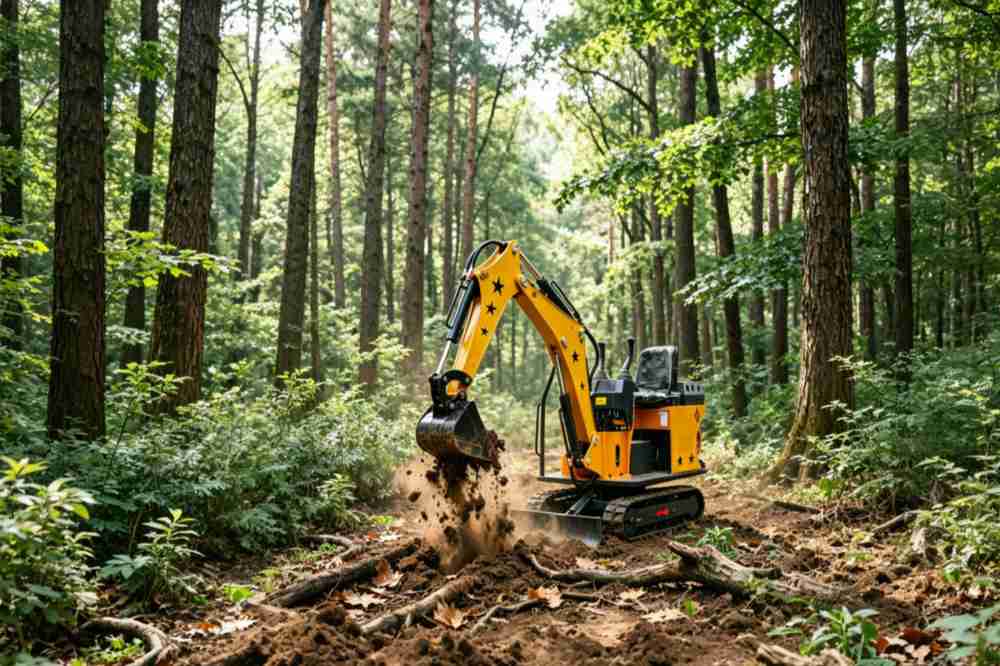

Micro Excavator: Advantages, Applications & Maintenance
A Comprehensive Guide for Small-Scale Construction
1. Core Advantages of Micro Excavators
Compact size: One of the most significant advantages is the machine's small footprint. With a body width of approximately 1 meter and height under 2.5 meters, micro excavators can easily access narrow alleys, indoor spaces, and complex terrain — areas where large excavators simply cannot go. For example, in old city pipeline maintenance projects, a micro excavator can enter a 1.2-meter-wide alley to complete excavation and debris removal, while larger equipment would be unable to operate.
Multifunctionality: By swapping attachments — breakers, grab buckets, standard buckets, and soil looseners — the same machine can handle excavation, breaking, material handling, and leveling. In landscaping projects, a grab bucket transports trees and stones; a breaker removes old concrete surfaces. This versatility maximizes equipment utilization.
Cost-effectiveness: Fuel consumption is typically only one-third to one-half that of large excavators, with lower daily maintenance costs and affordable accessory prices. Its compact size also eliminates the need for oversized trailers, reducing transportation expenses. For small engineering teams or individual operators, the total cost of ownership is significantly more affordable.
2. Typical Application Scenarios
Urban renovation: Old residential drainage pipe replacement requires trenching in narrow roads or green belts. Micro excavators operate flexibly without damaging surrounding infrastructure. Combined with a breaker, they also handle small-scale demolition — old walls, small structures — with minimal noise and dust.
Landscape engineering: Precision excavation of tree pits, terrain grading, and transport of landscape stones and plants via grab bucket. Faster than manual labor while ensuring consistent quality — ideal for detail-oriented landscaping projects.
Indoor renovation & demolition: Micro excavators can enter through elevators or stairs to demolish floors, remove old tiles and concrete, and clear debris in shopping malls and hotels. In office building renovations, this process is several times faster than manualdemolition while significantly reducing worker fatigue.
Agricultural & orchard use: Excavating foundations, transporting materials, digging irrigation ditches, and — with specialized attachments — performing orchard fertilization and weeding. A versatile tool for modern agricultural mechanization.
3. Comparison with Traditional Equipment
Vs. manual labor: Excavating 1 cubic meter of soil takes several hours by hand but only about ten minutes with a micro excavator — and it can work continuously. This dramatically shortens project timelines while reducing labor costs and safety risks.
Vs. small loaders: Loaders excel at handling and leveling but struggle with deep excavation. Micro excavators dig deeper and more precisely — essential for narrow underground pipeline trenches. Their 360° swing capability also provides unmatched flexibility in confined spaces.
Vs. large excavators: Large machines dominate big earthworks but cannot access tight or complex sites. Micro excavators thrive in these environments. Additionally, operation is simpler — no professional large-excavator certification required. After short-term training, ordinary workers can operate effectively, lowering manpower barriers.
4. Operation & Maintenance Guidelines
Operation: Micro excavators typically feature pilot controls with light, responsive handles. Novice operators can master basic functions — starting, traveling, digging, and swinging — quickly. Always review safety procedures before operation: check the surrounding environment, confirm attachments are secure, and avoid overloading.
Daily maintenance: Regularly check engine oil, hydraulic oil, and coolant levels. Clean air and fuel filters to prevent dust ingestion. Inspect track or tire wear and adjust tension as needed. For attachments, lubricate connection points regularly and replace worn or damaged components promptly.
Long-term storage: Park in a dry, ventilated area protected from rain and direct sunlight. After shutdown, disconnect the battery and relieve hydraulic system pressure. Apply rust prevention to metal components and cover the machine with a dust cover. Proper storage extends service life and reduces future repair costs.