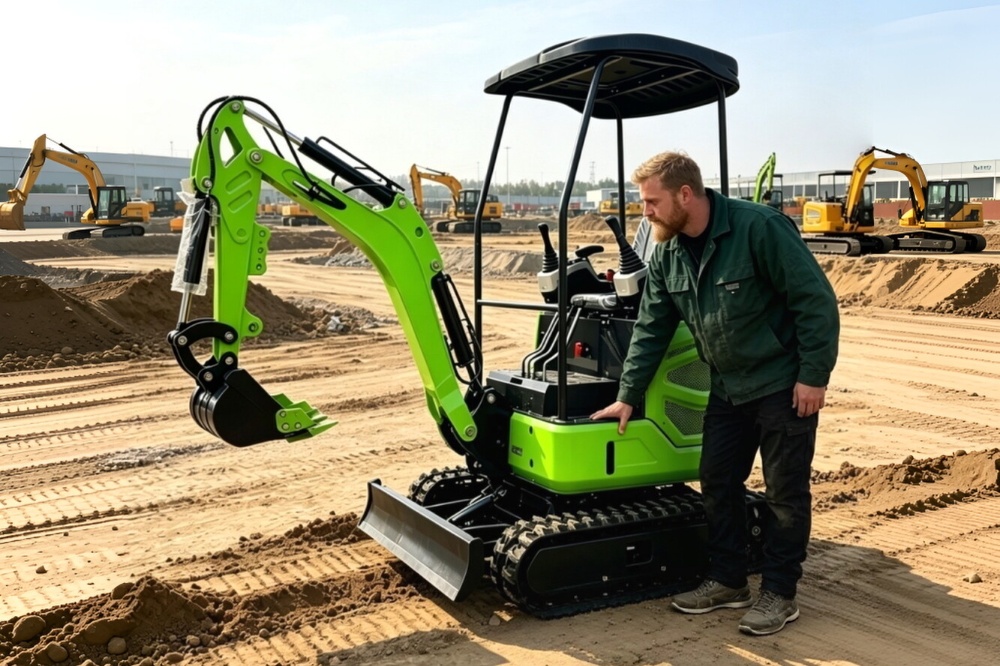

What Is an Excavator
Excavators, also known as digging machines or earthmoving machines, are earthmoving machinery that use buckets to excavate materials that are higher or lower than the bearing surface, and load them into transport vehicles or unload them into the material yard.
The materials excavated by excavators mainly include soil, coal, sediment, as well as pre-loosened soil and rocks. From the development of construction machinery in recent years, the development of excavators has been relatively fast, and excavators have become one of the most important construction machinery in engineering construction.
The three most important parameters of an excavator are operating weight (mass), engine power, and bucket capacity.
Classification
By Drive Method
Internal combustion engine driven and electric driven excavators.
By Size
Large excavators, medium excavators, and small excavators.
By Travel Mode
Crawler (track) excavators and wheel excavators.
By Transmission
Hydraulic excavators and mechanical excavators (mechanical mainly used in large mines).
By Bucket
Front shovel, backhoe, dragline, and grab shovel. Front shovels excavate above the surface; backhoes excavate below it.
Types of Excavators
1. Backhoe Excavator
Backhoe is the most common type we see, cutting soil backwards and downwards with force. It is used for excavation below the shutdown work surface. Basic operation methods include ditch-end excavation, ditch-side excavation, straight-line excavation, curve excavation, excavation at a certain angle, super-deep ditch excavation, and ditch-slope excavation.
2. Front Shovel Excavator
The digging action of a front shovel excavator is characterized by "moving forward and forcefully cutting soil". It has strong excavation force and can excavate soil above the machine surface. It is suitable for excavating dry foundation pits higher than 2 meters, but an up-and-down ramp must be set up. Its bucket is slightly larger than that of a backhoe of the same class, and it can excavate first to third type soils with a moisture content of no more than 27%. It can also work with dump trucks to complete the entire excavation and transport operation, and is ideal for large dry foundation pits and soil mounds. Excavation and unloading vary with the route and the relative position of the transport vehicle: forward excavation with lateral unloading, or forward excavation with reverse unloading.
3. Dragline Excavator
Also known as a cable shovel excavator, its excavation characteristics are "backwards and downwards, self-weight cutting soil". Suitable for excavating Class I and II soil below the shutdown surface. By using inertia to throw the bucket out, it can dig farther, with a larger excavation radius and depth, though it is less flexible and accurate than a backhoe. Especially suitable for large and deep foundation pits or underwater excavation.
4. Grab Shovel Excavator
Also known as a grab bucket excavator, its excavation characteristics are "straight up and down, self-weight cutting soil". Suitable for excavating Class I and II soil below the shutdown surface, commonly used for foundation pits and sinking wells in soft soil areas. Especially suitable for deep and narrow foundation pits, dredging old channels, and excavating silt from water, or loading loose materials such as gravel and slag. Two excavation methods exist: trench-side excavation and positioning excavation. A grid-shaped grab bucket can also load ore blocks, wood chips, and timber in storage yards.
Safety Guidelines
1
After the excavator enters the construction site, the driver should first observe the geological conditions of the working face and surrounding environment. Keep the rotation radius free of obstacles to avoid scratching or damaging the machine.
2
When moving the excavator, the driver should observe and sound the horn first to prevent accidents caused by people on the machine side. After moving, ensure no obstacles remain in the rotation radius; illegal operations are strictly prohibited.
3
After the machine starts, no one is allowed to stand in the bucket, on the shovel arm, or on the tracks, to ensure safe production.
4
During operation, no personnel may stay or walk within the turning radius or under the bucket. Non-drivers are not allowed to enter the cab or operate the controls.
5
After work, the excavator should be moved away from low-lying areas or trench edges and parked on flat ground.
6
Drivers must perform daily maintenance, repair, and upkeep, keep daily usage records, and report any problems promptly.
7
Keep the cab clean and tidy, and the machine surface free of dust and oil stains.
Routine Inspection
Regular maintenance reduces malfunctions, extends service life, shortens downtime, improves efficiency, and lowers operating costs. A visual inspection should be conducted before starting the machine, checking the surrounding environment and the underside in the following order:
1
Check for oil, fuel, and coolant leaks.
2
Check for loose bolts and nuts.
3
Check for broken wires, short circuits, or loose battery connectors in the electrical circuit.
4
Check for oil contamination.
5
Check for accumulated debris or foreign objects.
Daily Maintenance Precautions
Daily inspection is key to the long-term efficient operation of hydraulic excavators. Doing it well effectively reduces maintenance costs.
First, rotate the machinery twice to check for abnormalities in its appearance and chassis, and any grease leakage from the slewing bearings. Then inspect the deceleration and braking devices, as well as track bolts and fasteners — tighten or replace them in time. For wheeled excavators, check the tires and tire pressure stability.
Check whether the bucket teeth show significant wear; worn teeth increase resistance during operation, seriously affecting efficiency and accelerating component wear.
Check the boom and cylinders for cracks or oil leaks, and check the battery electrolyte to avoid falling below the low-level line.
The air filter prevents large amounts of dust from entering the excavator and should be checked and cleaned regularly.
Regularly check whether fuel, lubricating oil, hydraulic oil, and coolant need to be topped up, and keep them clean.