

Lawn Mower
From Traditional Machinery to Intelligent Robots — Evolution & Practical Guide
Lawn mower, also known as a lawn mower or grass trimmer, is a mechanical tool used for trimming lawns and vegetation. Since the birth of the first mechanical lawn mower in 1805, it has evolved from manual labor and fuel power to electric and intelligent automation — greatly freeing manpower and improving the efficiency of garden maintenance and agricultural production. This article provides a comprehensive analysis of the historical evolution, classification, buying guide, operating standards, and future trends of lawn mowers.
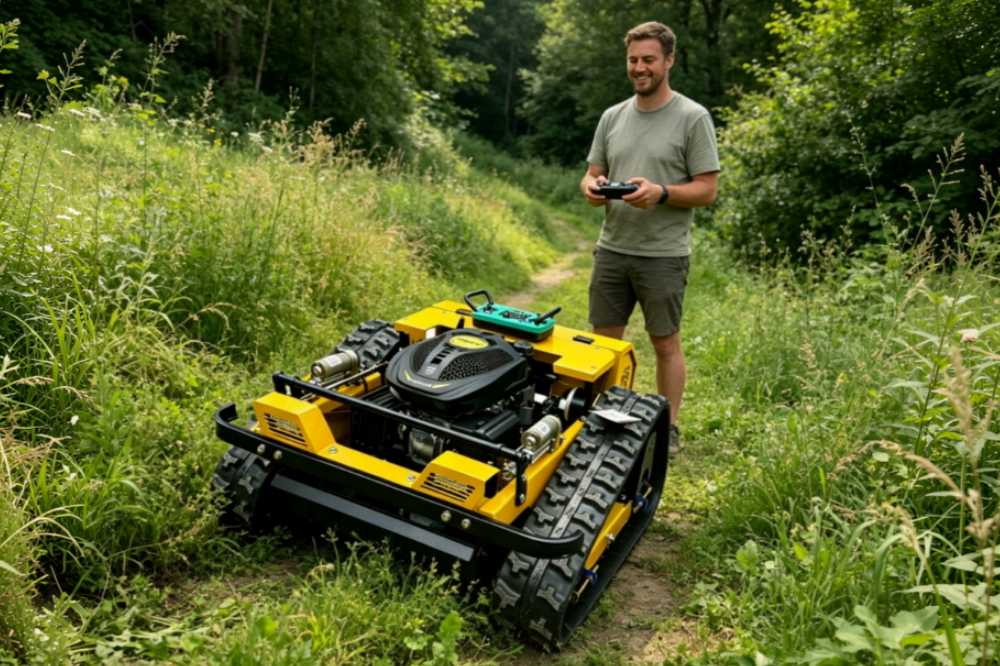
1. Historical Evolution
The history of lawn mowers is a journey from "human-powered pushing and pulling" to "intelligent unmanned operation":
① Early Manual Stage (1805–1830): In 1805, British inventor Planknett invented the first manually driven mechanical lawn mower, using gear transmission to drive a rotary blade. Although it improved efficiency over hand scythes, it still relied on human labor and was expensive — mainly used by middle-class families and golf courses.
② Fuel-Powered Stage (1902 onwards): In 1902, the first gasoline-powered lawn mower was manufactured in Britain, breaking free from human labor limitations and greatly improving mowing efficiency and endurance — paving the way for the popularization of lawn mowers.
③ Electrification Stage (Mid-to-Late 20th Century): With growing environmental awareness, electric lawn mowers (wired and lithium-ion) began to gain popularity. They solved the problems of loud noise, heavy pollution, and high operating costs associated with fuel engines, making them more suitable for home courtyards and small-scale lawns.
④ Intelligent Stage (2000–Present): Driven by advances in AI, RTK (Real-Time Kinematic) positioning, and visual fusion technology, intelligent robotic lawn mowers have emerged. Featuring automatic path planning, obstacle avoidance, and remote control, they represent a leap from "manual operation" to "fully autonomous operation."
2. Classification of Lawn Mowers
Lawn mowers can be classified by power source, travel mode, and mowing method:
By Power Source
Fuel-powered: Powered by gasoline or diesel — strong power and long runtime, suitable for large lawns or complex terrain. Drawbacks include loud noise and emissions.
Electric: Includes wired (plug-in, no range limits) and lithium-battery (portable, low noise, eco-friendly) models. Suitable for small to medium-sized lawns.
Intelligent robotic mower: Powered by lithium batteries and controlled by AI algorithms, achieving fully autonomous operation. Ideal for home courtyards and complex terrains.
By Travel Mode
Push-type: Suitable for small lawns, easy to operate, low price — but requires physical effort and is relatively labor-intensive.
Riding-type: Suitable for large lawns, comfortable and high-efficiency — but expensive, best for professional gardens or farms.
Backpack / Side-mount: Suitable for steep slopes, tree-dense areas, and orchards. Flexible and lightweight, but with lower power output.
By Mowing Method
Rotary blade type: Cuts grass stems with a high-speed rotating blade. High efficiency, suitable for tall and dense grass, but the cut edge is relatively uneven.
Reel (rolling blade) type: Cuts grass by the interaction of a rotating blade and a stationary bottom blade. Produces a clean, smooth cut — ideal for high-quality lawns such as sports fields. However, the structure is more complex and requires a minimum grass height.
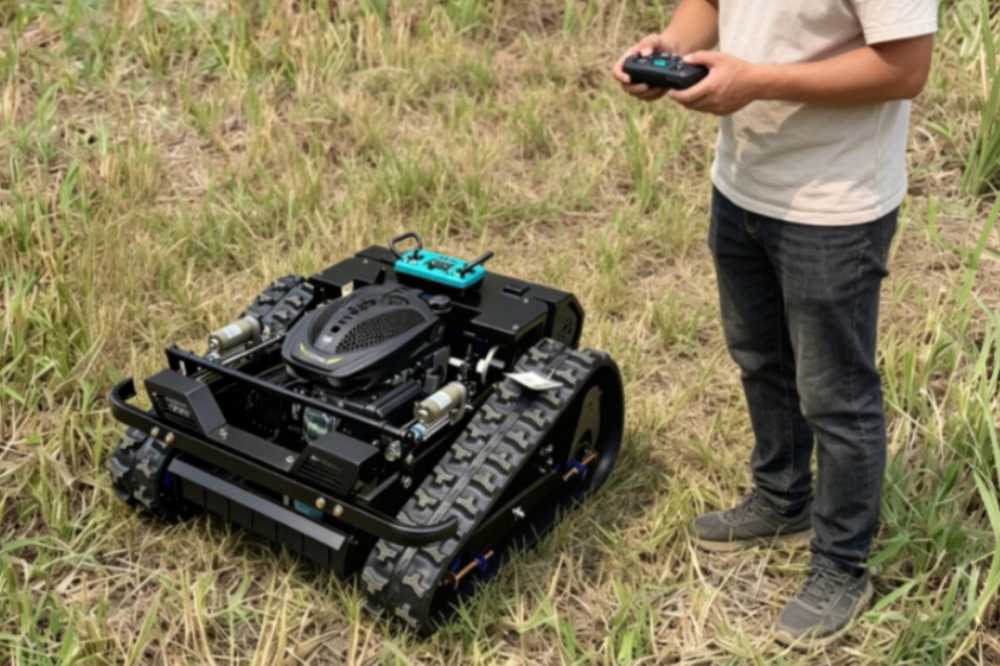
3. Buying Guide
When choosing a lawn mower, match it to your working environment, budget, and actual needs:
Match your environment: Lightweight lithium-electric push mowers or intelligent robotic mowers are recommended for small family courtyards. Riding mowers or high-power fuel engines suit large lawns or professional gardens.
Focus on core specs: Pay attention to motor power (brushless motors offer high torque and low noise), battery capacity (determines runtime), blade or cutting wire material, and obstacle-avoidance capability.
Check brand & after-sales: Choose reputable brands with comprehensive after-sales support. Avoid blindly chasing low prices — consider machine durability, the cost of replacing wear parts, and maintenance convenience.
4. Operating Standards & Maintenance
Proper operation and regular maintenance are key to extending machine life and ensuring safety:
Operating standards: Before starting, clear the lawn of stones, wooden sticks, and other debris to prevent blade damage. Adjust the cutting height appropriately based on grass length — if grass is too tall, mow in stages to avoid overloading the machine. Always stay alert to nearby people and pets, as high-speed blades can fling debris.
Maintenance: For fuel engines, regularly check oil levels and air filters, and clean carbon deposits promptly. For lithium batteries, charge regularly and avoid deep discharge. After each use, clean the blades and chassis of grass buildup to prevent rust and keep the machine in good condition.
5. Future Trends
Electrification & eco-friendliness: With advancing battery technology and tightening environmental regulations, lithium-ion lawn mowers and intelligent robotic mowers will gradually replace traditional fuel engines, becoming the market mainstream — delivering low noise and zero emissions.
Intelligence & autonomy: Future lawn mowers will deeply integrate AI, RTK + visual navigation, and LiDAR to achieve centimeter-level precision cutting, adaptive obstacle avoidance in complex terrain, and remote monitoring via mobile apps — further freeing up manpower.
Multi-function integration: Lawn mowers will evolve toward "integrated lawn care," combining pruning, fertilization, and weeding into one system — becoming a comprehensive solution for intelligent garden maintenance.
Lawn mowers, as essential tools for garden maintenance and agricultural machinery, continue to evolve with technology. Whether for delicate home courtyard trimming or large-scale farm land clearing, choosing the right equipment and mastering proper usage methods will make lawn care twice as effective with half the effort.
ENSENK Machinery — Your Trusted Work Partner