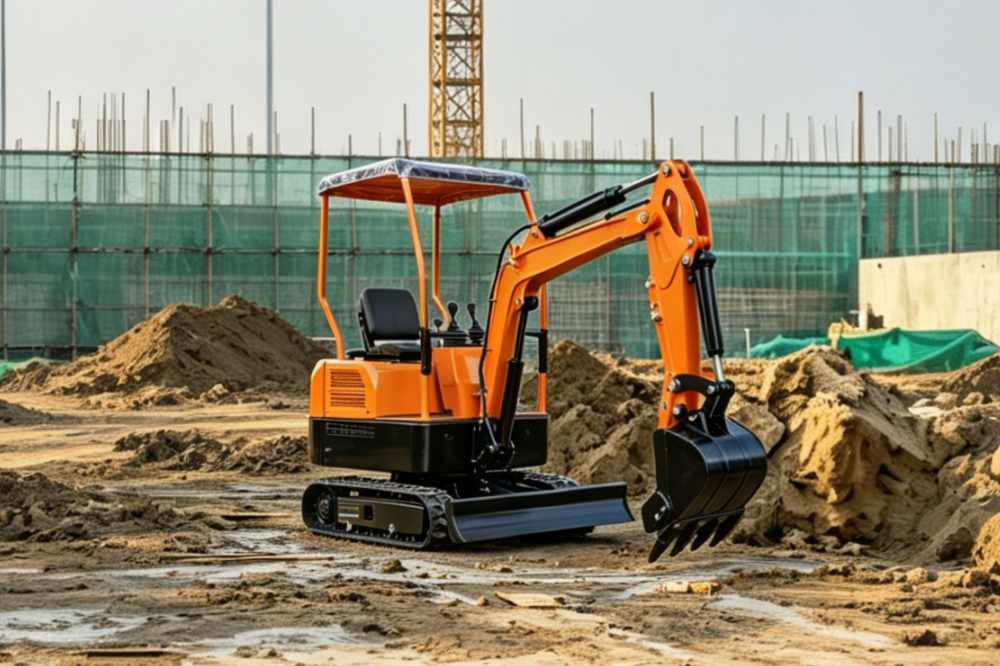

Small Excavators
Characteristics · Applications · Operating Essentials
In many fields such as engineering construction and agricultural production, small excavators are practical, common mechanical equipment. They play an important role in complex, narrow venues thanks to their compact, agile design. In simple terms, a small excavator is relatively compact and highly flexible. Compared to large excavators, its body is more compact and can operate in areas with limited space — such as narrow streets and indoor construction sites.
Key Characteristics
① High flexibility: Due to its small size, it can easily turn and make U-turns in narrow spaces, and adapt to various complex terrains and working environments. For example, in old-residential-area renovation projects where large excavators cannot enter, small excavators can step in and complete excavation, leveling, and other work in confined spaces.
② Low cost: Both the purchase price and operating cost are much lower than those of large excavators. For small engineering teams or individual operators, a small excavator is an economical choice. Its fuel consumption is relatively low and maintenance is convenient, reducing overall operating costs.
③ Simple operation: After short-term training, operators can master the controls proficiently. This makes small excavators widely used in temporary and small-scale projects.
Applications
Basic construction: Excavate small foundation pits (residential house foundations, villa basements), trenches (pre-buried water/electricity pipeline trenches, heating pipeline trenches), and use a breaker hammer to break hard soil layers or small stones below the foundation — avoiding the need for large equipment that could damage surrounding structures.
Site preparation: Level residential land and temporary construction sites, clear construction waste (broken bricks, concrete blocks), or assist in transporting building materials such as sand, gravel, and cement (using grab buckets or standard buckets).
Indoor / courtyard work: In villa and self-built house projects, excavate indoor septic tanks and basement drainage ditches, or repair courtyard terrain (create sunken gardens, excavate landscape pools). Its compact size allows it to pass through courtyard doors and corridors — some micro models even fit through standard doorways — without damaging walls.
Old-house renovation & demolition: Assist in demolishing small walls and old house roofs (equipped with breaker hammers or hydraulic pliers), clean up demolition waste afterward, and avoid the vibration impact that large crushing equipment would cause on surrounding buildings.
Six Core Scenarios
1. Agricultural & forestry: Orchard fertilizer-ditch excavation, greenhouse drainage channels, terraced-field renovation, fish-pond digging, livestock-farm clearing, mountain-land reclamation. Paired with a grapple attachment, it can also load and unload timber and fodder.
2. Municipal fine engineering: Sidewalk maintenance, water/cable pipe trench excavation, community greening, broken sidewalk repair, and old-community renovation. Compact size means it doesn't block traffic.
3. Rural self-built housing: Foundation leveling and excavation, septic-tank digging, courtyard-wall foundation work, and field-path construction — replacing dozens of manual workers and boosting efficiency by more than 20×.
4. Landscape engineering: Tree-pit excavation, rockery landscaping, lawn preparation, large-tree transplanting, and river-slope protection — all fine-construction tasks where precision matters.
5. Indoor / narrow-space construction: Basement wall demolition, mall renovation, broken indoor-floor removal. A 1-ton micro excavator can drive directly through a corridor to the work area.
6. Multi-function attachments: Swap the bucket for a breaker hammer to crush cement floors, old walls, and rock; switch to a spiral drill to bore holes for photovoltaic piles and fruit-tree planting.
Operating Precautions
Before starting, conduct a comprehensive inspection — check fuel, engine oil, and hydraulic-oil levels, and inspect tire or track condition. During operation, follow procedures strictly to prevent safety incidents caused by improper operation, and stay alert to the surrounding environment at all times.
Regular Maintenance
Regular maintenance is essential for smooth operation. Follow the prescribed service intervals, and replace wear parts promptly to keep the machine in good condition.
With their unique advantages, small excavators have become indispensable across many industries. Understanding their characteristics, applications, and operating essentials will help you get the most from this equipment.